



Knee osteoarthritis is not limited to runners; it can also affect office workers, students, and those with sedentary lifestyles. Early recognition of patellar cartilage degeneration helps prevent chronic pain and long-term knee joint damage.
Runner's knee syndrome is the common name for patellar cartilage degeneration – a common disorder of the knee joint. However, this name can easily mislead people into thinking that the condition only occurs in those who frequently run or engage in high-intensity exercise.
In fact, anyone can suffer from this syndrome, from office workers, students, and the elderly to those who are sedentary but suddenly engage in strenuous exercise after a long period of sitting. Medical studies show that a sedentary lifestyle combined with incorrect posture and muscle imbalances is the main cause of damage to the knee cartilage.
1. What is runner's knee syndrome?
Runner's knee syndrome is a condition where the cartilage on the back of the patella (kneecap) wears down or degenerates, disrupting the natural sliding motion of the patella during knee flexion and extension. Dr. Ashis Acharya, an orthopedic and sports medicine specialist from India, explains: Patellar cartilage acts as a smooth cushion, allowing the knee joint to move smoothly during walking, climbing stairs, squatting, and standing up and sitting down. When the cartilage wears down, this smooth movement turns into friction. Importantly, cartilage lacks nerve endings, so patients don't feel the damage immediately. Pain only appears when the underlying bone is subjected to abnormal pressure.
This is also why many people overlook the early signs, only seeking medical attention when the condition has progressed to chronic pain or osteoarthritis of the knee.
2. Why does the patellar cartilage get damaged?
Patellar cartilage degeneration is rarely a standalone cause, but is usually the result of muscle imbalance and impaired knee joint movement.
Common causes include:
1. Weak hip and gluteal muscles: Weak hip muscles cause a misalignment of the lower limb's axis of movement, leading to the patella sliding in the wrong direction when bending and straightening the knee.
2. Poor quadriceps muscle function: This is especially true for the vastus medialis muscle, which plays a role in stabilizing the patella. When this muscle functions inefficiently, the pressure on the articular cartilage increases significantly.
3. Tight hamstrings and hamstrings: This restricts knee range of motion and increases compression on the patellofemoral joint.
4. Incorrect training techniques or sudden increase in intensity: Many people who are inactive suddenly start running, climbing stairs, or doing high-intensity squats without properly preparing their muscles and joints.
5. Prolonged sitting and poor posture: Sitting with knees bent for extended periods, crossing legs, or bending over incorrectly all alter the distribution of force on the knee joint.
3. Early signs you shouldn't ignore.
Runner's knee syndrome often has a silent onset, but there are still warning symptoms:
- A dull ache in the front of the knee, which worsens when climbing stairs or descending slopes.
- Pain along the inner edge of the kneecap.
- Stiff knees after sitting for a long time or upon waking up.
- Mild swelling after exercise.
- There may be a "rustling," clicking, or popping sound when bending or straightening the knee.
- The pain increases when squatting or standing up and sitting down repeatedly...
Experts advise that knee pain lasting more than 2–3 weeks, even if mild, should not be ignored.
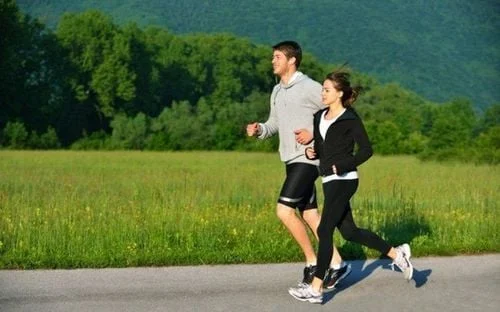
Runner's knee syndrome is entirely preventable and manageable through maintaining regular exercise...
4. How is it treated and prevented?
A common misconception is that simply resting for a few days will make the pain go away. According to orthopedic experts, rest only provides temporary symptom relief and does not address the root cause.
Current treatment principles focus on:
- Proper exercise: Exercises to strengthen the quadriceps, glutes, and hips; exercises to control knee alignment and balance…
- Stretch tight muscle groups: Especially the hamstrings, hamstrings, and calf muscles.
- Adjust your posture: Sit correctly, avoid bending your knees for extended periods, and limit climbing stairs when you are in pain.
- Early intervention: Physical therapy and functional orthopedics help reduce the risk of progression to full-blown osteoarthritis of the knee.
"Enduring the pain isn't a strong approach; it's a way to wear down cartilage faster," Dr. Acharya emphasized.
While the risk cannot be completely eliminated, runner's knee syndrome is entirely preventable and manageable by:
- Maintain a regular exercise routine, gradually increasing the intensity.
- Keep your thigh muscles strong and flexible.
- Avoid sitting for too long; change your posture frequently.
- Practice proper technique, especially when running or squatting...
Knee pain is not just a "minor issue of youth" or something you have to endure in old age. Early identification of runner's knee syndrome is key to protecting knee cartilage, maintaining mobility, and improving quality of life in the long term.