New research reveals the complex cultural behavior of Neanderthals through the collection of animal skulls in the Des-Cubierta cave more than 43,000 years ago.
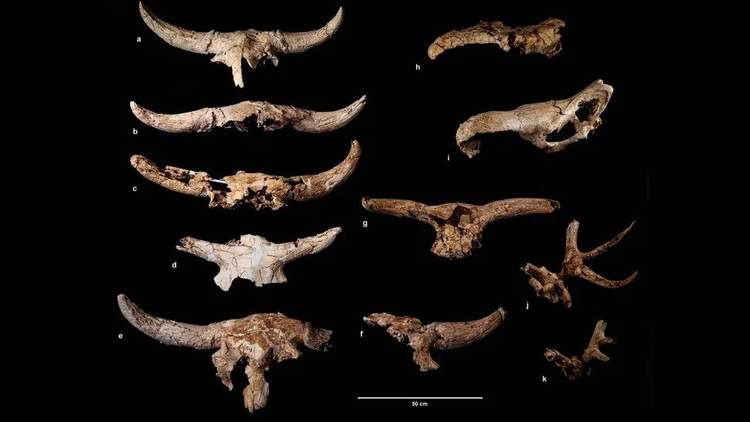
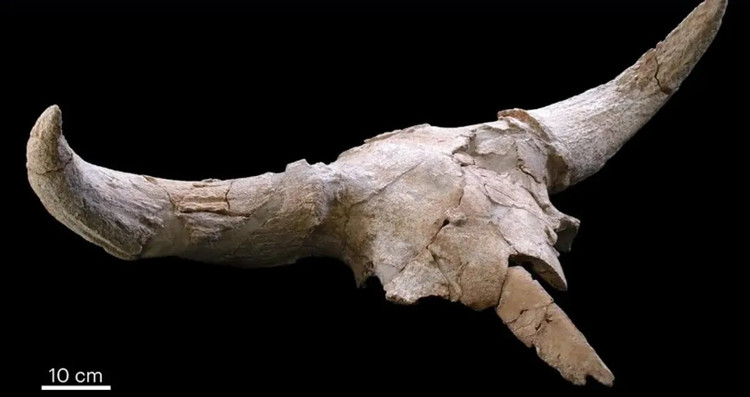
A new study reveals that Neanderthals deliberately collected and arranged horned and antlered animal skulls in a cave in what is now Spain. They did this for centuries, suggesting complex cultural practices more than 43,000 years ago. Image: Baquedano et al. Nature Human Behaviour (2023) CC-BY-4.0.
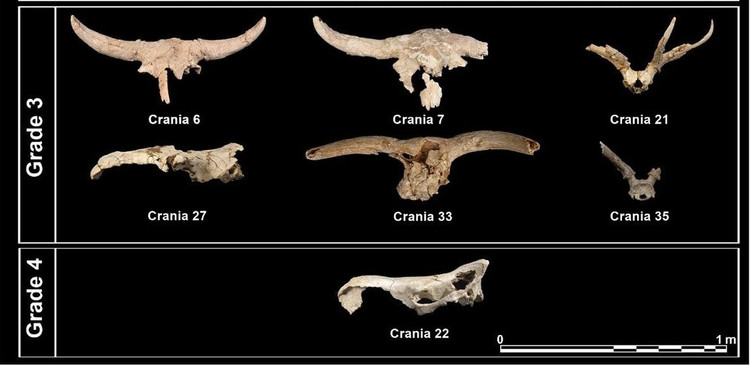
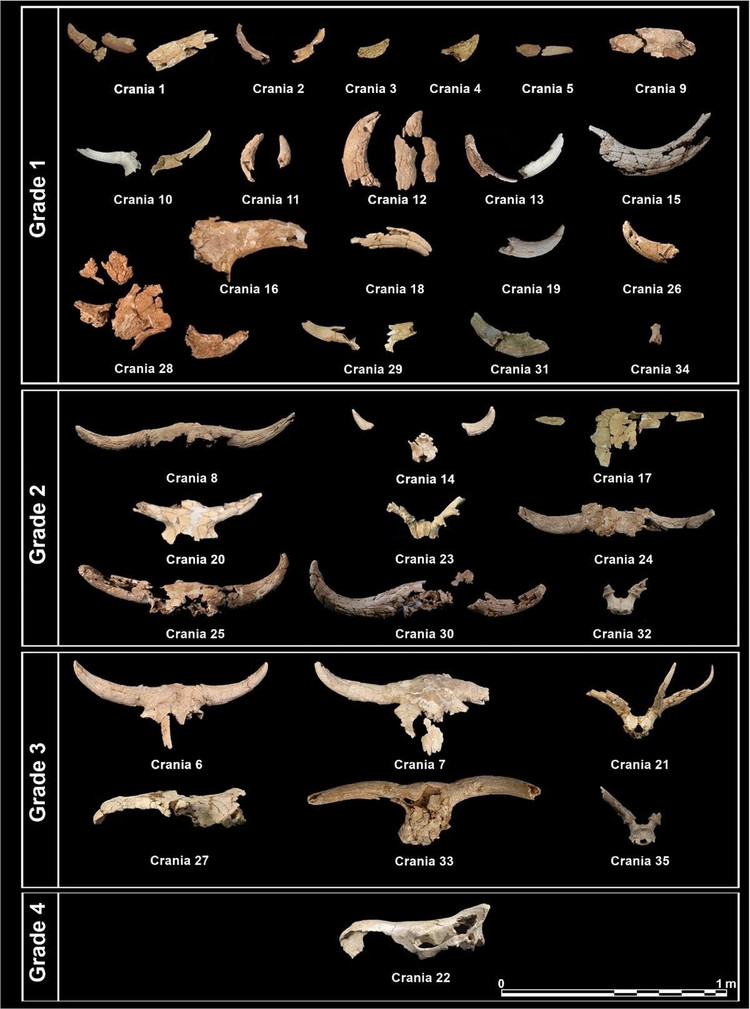
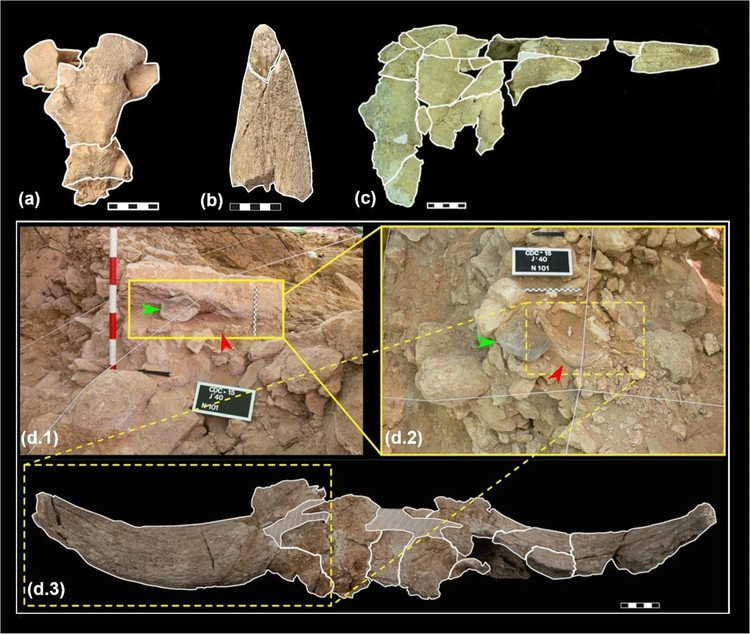
The Des-Cubierta cave, located in the heart of the Iberian Peninsula, was first discovered in 2009. In 2023, researchers announced the unusual discovery of a collection of 35 large mammal skulls inside the cave. (Image: Baquedano et al., Nature Human Behaviour 2023 (CC BY 4.0)).
According to researchers, most of the jawbones were missing, but all the skulls belonged to species with horns or antlers, such as steppe bison and European bison. Also at the Des-Cubierta cave, experts found more than 1,400 stone tools of the same age. All were in the typical Mousterian style of Neanderthals. Image: L. Villaescusa et al., Archaeological and Anthropological Sciences (2026); CC BY 4.0.
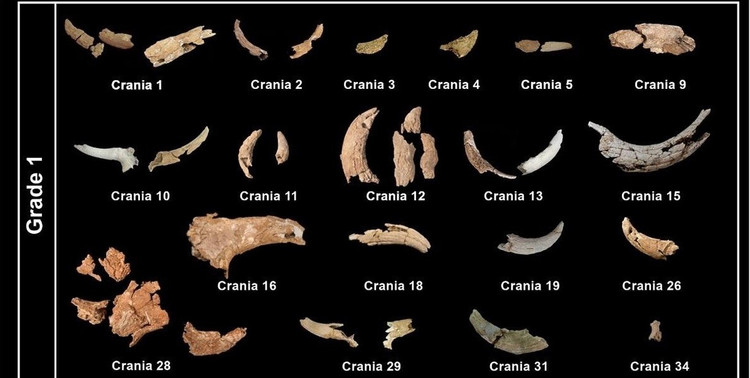
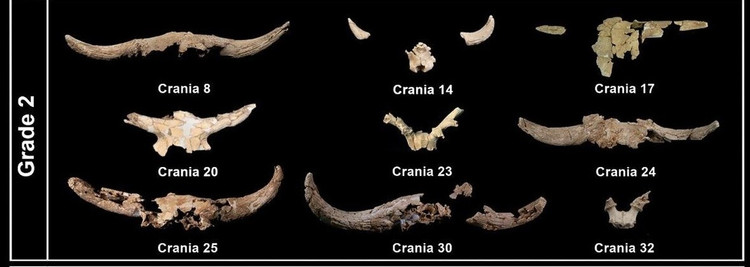
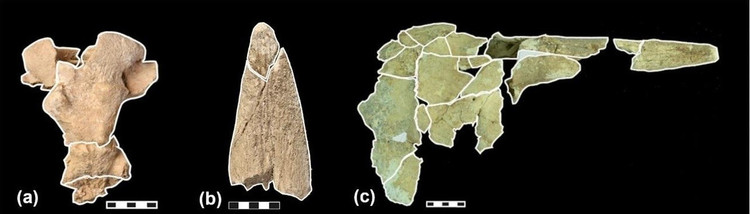
The team of experts stated that the Des-Cubierta cave has experienced numerous rockfalls over the millennia following its use. Therefore, the study's lead author, Lucía Villaescusa Fernández, and colleagues analyzed the role of these changes separately from Neanderthal activity. Image: L. Villaescusa et al., Archaeological and Anthropological Sciences (2026); CC BY 4.0.
This helps confirm that Neanderthals collected animal skulls for an extended period, especially during the colder times from 135,000 to 43,000 years ago. Image: L. Villaescusa et al., Archaeological and Anthropological Sciences (2026); CC BY 4.0.
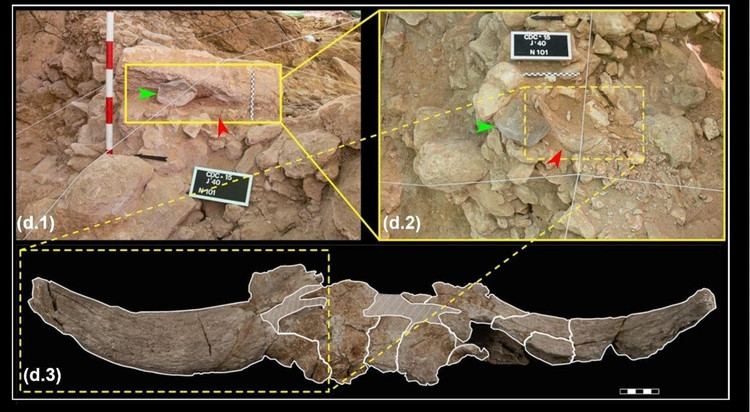
The research team carefully mapped the locations of all the archaeological remains found in the Des-Cubierta cave. They then compared the distribution of the rock fragments with the distribution of animal bones and stone tools. This led them to find clear evidence of the number of animal bones intentionally placed in the cave by the Neanderthals. Image: L. Villaescusa et al., Archaeological and Anthropological Sciences (2026); CC BY 4.0.
Although the exact timeframe and duration of this tradition could not be directly measured, the research team also found that animal skulls had been placed in specific areas of the cave repeatedly over a long period. Image: L. Villaescusa et al., Archaeological and Anthropological Sciences (2026); CC BY 4.0.
According to expert Villaescusa Fernández, this suggests that the practice may have been maintained for generations and is not directly related to livelihood or
economic issues. Image: L. Villaescusa et al., Archaeological and Anthropological Sciences (2026); CC BY 4.0.
Expert Villaescusa Fernández says the exact reason why Neanderthals collected these skulls remains unclear, but the selection, handling, and arrangement of horned animal skulls in a cave where they did not live "highlights the possibility of engaging in cultural activities not directly related to survival." Image: L. Villaescusa et al., Archaeological and Anthropological Sciences (2026); CC BY 4.0.
"This has significant implications for how we understand Neanderthal societies, particularly regarding the transmission of culture and shared traditions," added expert Villaescusa Fernández. Photo: Abel Grau, CSIC Communication.
This article is provided by Vietnam.vn EN, authorized for use, and represents solely the author’s personal opinions. Please contact us in the event of any potential infringement.